You’ve heard traders talk about calls and puts — but if you’re not clear on how they actually work, you’re not alone.
Let’s cut through the jargon.
In simple terms, call and put options are contracts that let you control a stock’s movement without owning it outright.
And once you understand how they work, you’ll realize why options are not just tools for speculation — they’re the language of modern trading.
🤫 “Most traders chase price. The pros trade permission — and options are the permission slip.” — MarketSnack
What Are Options? (Plain-English Definition)
Options are financial contracts that give you the right, but not the obligation, to buy or sell a stock at a specific price before a set date.
That’s it. No magic — just leverage, flexibility, and control.
Options let you express a view: bullish, bearish, or neutral — and do it with less capital than buying shares outright.
They exist across the stock market and the options market, giving traders multiple ways to profit or hedge.
Calls vs Puts in One Minute (Definition & Meaning)
- A call option gives you the right to buy a stock at a specific price (the strike).
- A put option gives you the right to sell a stock at that price.
- Think of it as “buying insurance” for your trades — calls for upside, puts for downside.
Why Options Exist: Hedging, Leverage, and Income
Options were created for hedging risk, but traders quickly realized their power for leverage and income generation.
- Hedgers use puts to protect portfolios.
- Traders use calls to capture breakouts.
- Institutions write options to earn consistent premium income.
Key Terms You’ll Use Next
- Strike price: The target price of your contract.
- Expiration: The date when your option stops existing.
- Premium: What you pay (or receive) for the contract.
Call Options — How They Work and When to Use Them
A call option is bullish by nature. You’re betting that a stock will rise above your strike before expiration.
Rights, Payoff, and Breakeven
Owning a call gives you the right to buy at the strike price.
If the stock rises above your strike, your call gains value — that’s leverage.
Your breakeven is:
Strike price + premium paid.
Example:
You buy an AAPL call with a strike at $180, paying $3 in premium.
If AAPL closes above $183, you’re profitable.
Bullish Scenarios: Momentum and Catalysts
Calls shine when volatility is your friend — earnings, product launches, or strong momentum days.
It’s about catching the move, not holding forever.
😎 “The difference between a gambler and a trader? The trader knows when his call expires.” — MarketSnack
Common Mistakes with Calls
- Overpaying for premium (buying too late).
- Choosing expiration too close (theta decay eats your option).
- Ignoring volume or liquidity (bad fills = instant loss).
Put Options — Protection, Downside Bets, and Real Use Cases
A put option is your bearish or protective weapon. You profit when the stock drops — or use it as insurance.
Protective Puts: Portfolio Insurance

Speculative Puts (Bearish Trades)
Don’t own the stock? No problem.
You can buy puts to bet on downside moves — but manage risk.
Unlike shorting, you can’t lose more than your premium.
Liquidity and Fills Matter in Puts
Wide spreads in puts can destroy returns.
Always check open interest and bid/ask spread before you enter.
👉 Secondary keywords: call and put option example, call and put in trading.
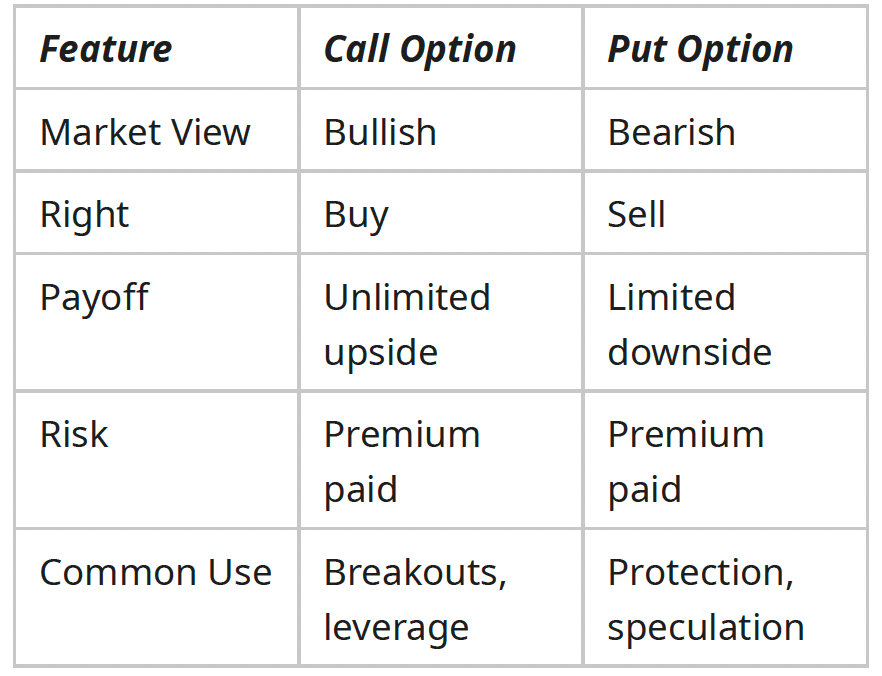
Call vs Put — The Difference That Actually Matters
When to Choose a Call vs a Put
- Use calls when expecting a strong bullish catalyst.
- Use puts to protect or profit from weakness.
Quick FAQ: What’s the Difference Between Call and Put?
A call option gives the right to buy; a put option gives the right to sell.
They mirror each other.
But smart traders use both — sometimes at the same time.
Pricing 101 — What Really Moves Option Prices
Intrinsic vs Extrinsic Value
Every option has two components:
- Intrinsic: The part that’s already in the money.
- Extrinsic: The time and volatility value.
As expiration nears, extrinsic value fades — known as time decay.
Implied Volatility (IV): The Wild Card
When earnings or macro events approach, IV spikes, making both calls and puts more expensive.
High IV inflates your premium — so timing matters.
The Greeks, Simplified
- Delta: How much the option moves with the stock.
- Gamma: How Delta itself changes.
- Theta: Time decay.
- Vega: Sensitivity to volatility.
Execution Matters — Bid and Ask Spread in Options (Your Hidden Cost)
What Is the Bid-Ask Spread in Options?
It’s the gap between what traders are willing to pay (bid) and what others want to receive (ask).
Tight spreads = efficiency.
Wide spreads = friction.
😉 “You’re not losing to Wall Street. You’re losing to the spread — quietly, one trade at a time.” — MarketSnack
How to Reduce Cost
Use limit orders, trade liquid tickers, and stay close to at-the-money strikes. Avoid thin volume and after-hours execution.
Numerical Example
You buy 10 call contracts at $1.25 ask and sell at $1.05 bid.
That $0.20 difference = $200 lost — before the chart even moved.
Core Strategies for Intermediate Traders (Risk-First)
Covered Call & Cash-Secured Put
Earn premium income while managing exposure.
- Covered call = sell calls on stocks you own.
- Cash-secured put = sell puts on stocks you’d like to own.
Vertical Spreads (Bull Call / Bear Put)
Control risk by combining long and short options at different strikes. It caps profit but limits loss — great for consistency.
Calendars and Diagonals
Play time and volatility differences — buy long-term, sell short-term. Perfect when IV is high.
When NOT to Trade Options
Avoid trading when liquidity is poor or spreads are wide. Bad fills destroy good setups.
👉 Secondary keywords: call and put spreads, call and put ratio.
FAQs (People Also Ask)
Are Call and Put Options Good for Beginners?
Yes, if you focus on learning structure first. Start with one contract, practice execution, and understand time decay.
What’s the Main Difference Between a Call and a Put?
A call = right to buy.
A put = right to sell.
Together, they form the backbone of the options market.
Can I Lose More Than My Premium?
Not when buying calls or puts. Your maximum loss = your premium.
Which Expiration and Strike Should I Choose?
Near-term expirations move fast but decay quickly. Far-term are slower but steadier. Pick based on volatility and your timeframe.
How Do Spreads and Liquidity Affect My Fills?
Tight spreads and high open interest = efficient fills.
Wide spreads = bad execution, poor edge.
👉 Secondary keywords: call and put for dummies, call and put stocks.
Key Takeaways
5 Quick Rules for Choosing Between Calls and Puts
- Bullish? Buy calls.
- Bearish? Buy puts.
- Uncertain? Wait for confirmation.
- Always check liquidity.
- Respect time decay — it’s undefeated.
5 Execution Rules That Save You Money
- Avoid illiquid contracts.
- Use limit orders.
- Monitor spreads.
- Track implied volatility.
- Keep size under control.
Trade the Flow, Not the Noise
See IV, Spread, and Liquidity in Seconds
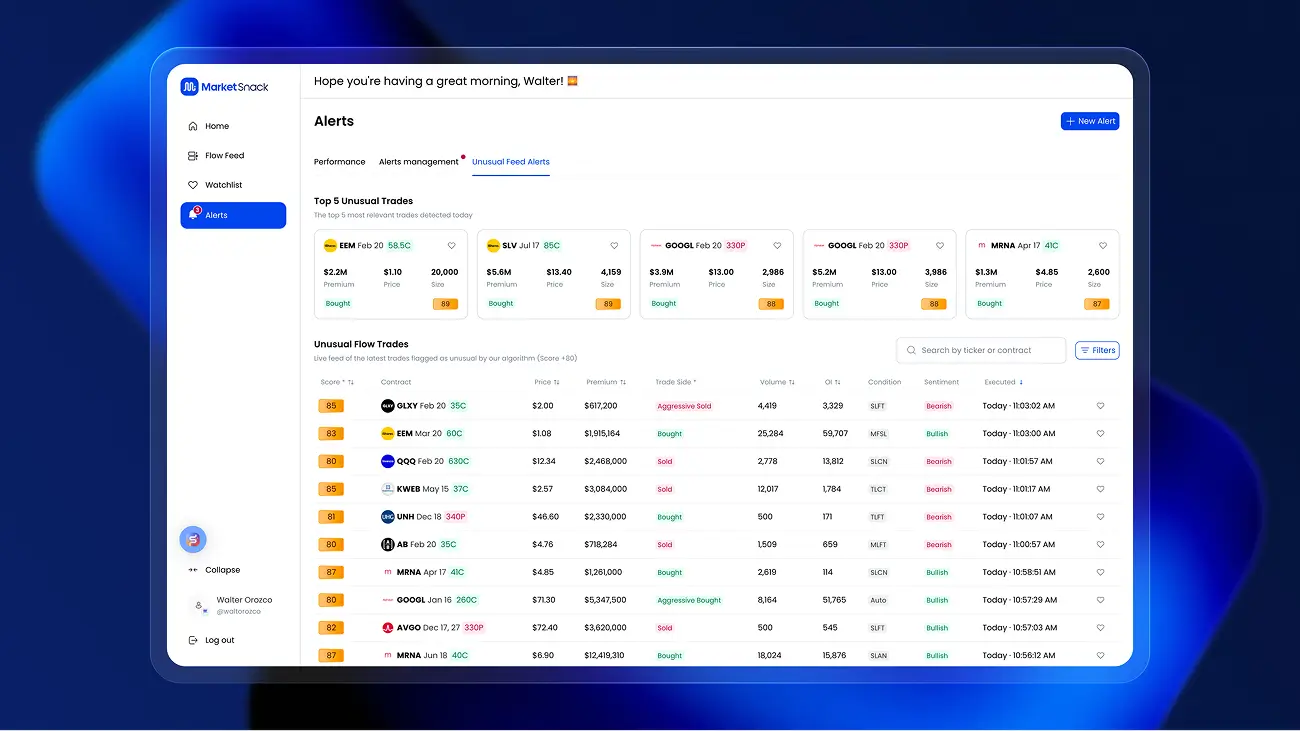
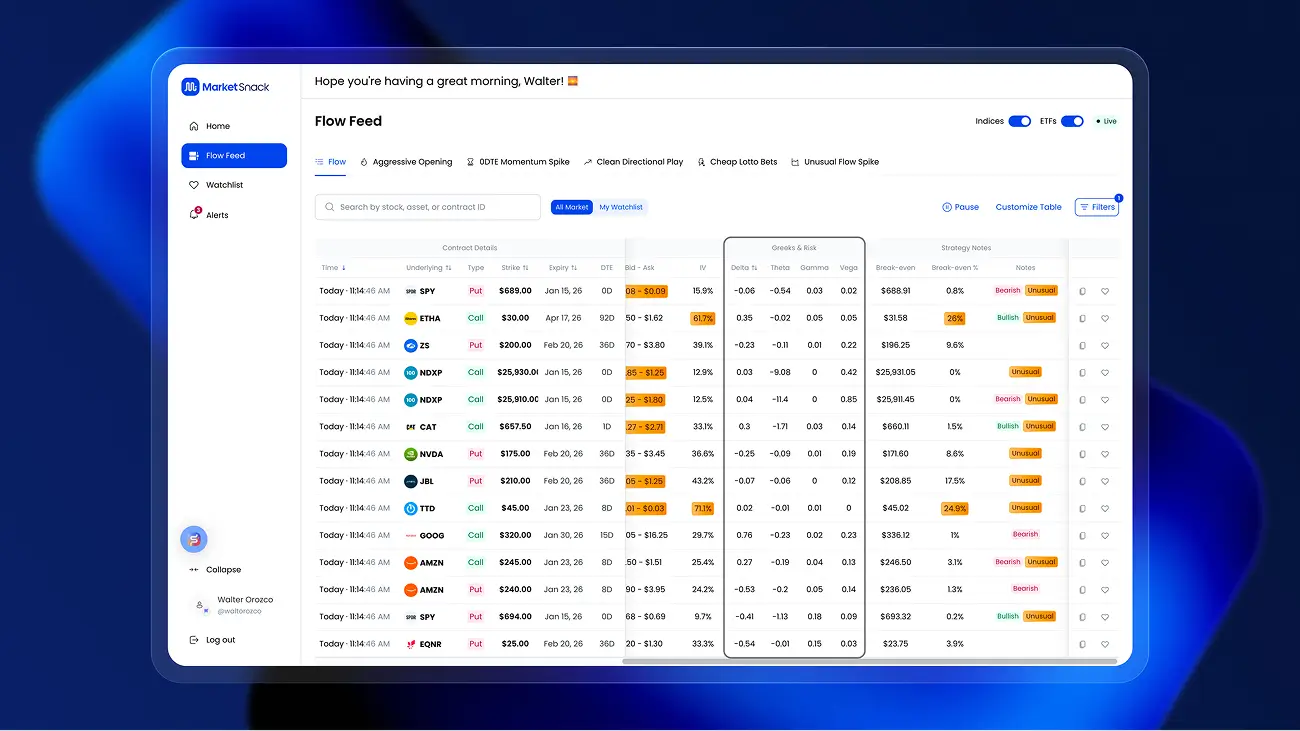
MarketSnack simplifies the chaos of call and put options by analyzing spreads, liquidity, and volatility in real time.
Detect Institutional Flow Automatically
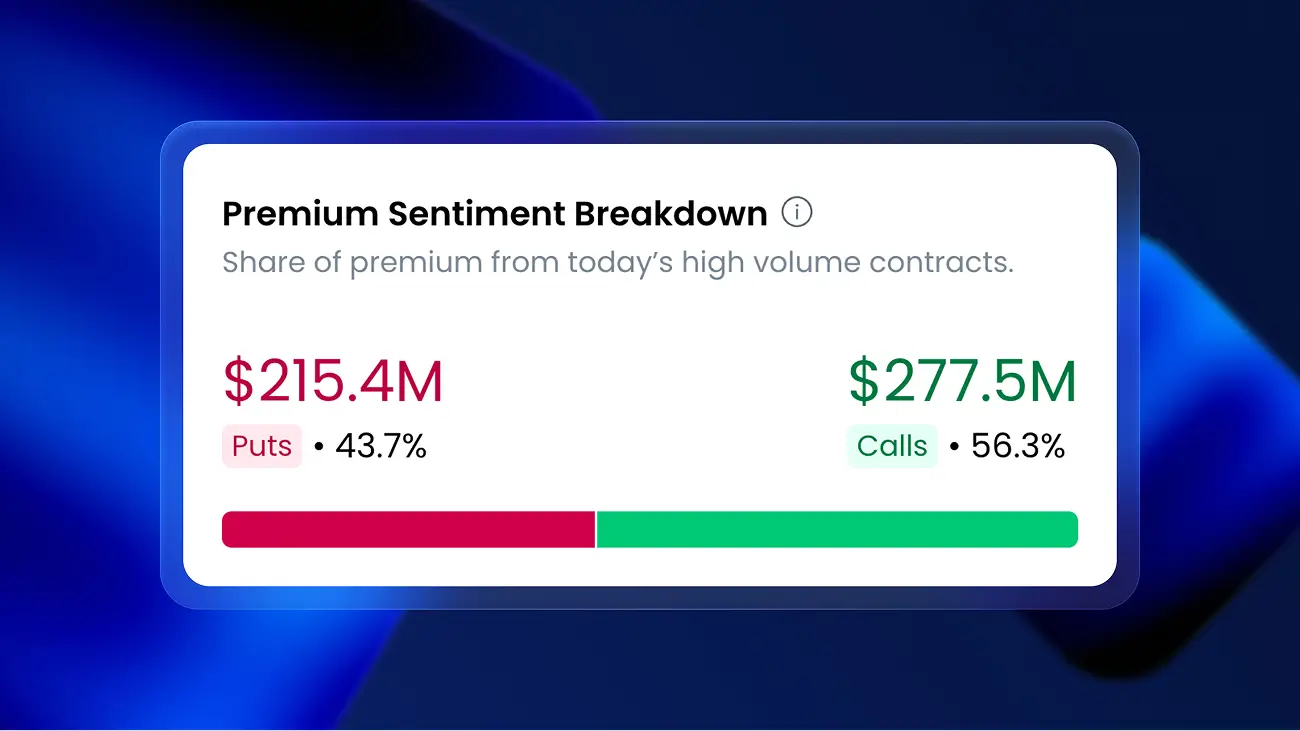
See where the big players are placing their bets — calls, puts, or spreads — without needing to read the tape manually.
Trade Smarter, Pay Less Spread
MarketSnack helps traders execute better by showing true market flow, not just price movement.